Car 101Lined up with the other Canadian teams for the group photo.On the way to techBeing pushed over to technical inspection.
Featured work
Choosing the roll centre heights, worked twice so the two answers could be held against
each other. Lateral load transfer distribution is taken as Milliken and Milliken define it,
through the neutral roll axis: I built that by hand as an Excel calculator, then
solved the same question live in a 9 DOF Simulink model where load transfer falls out
of the suspension states rather than a steady-state formula. The heights I settled on came
from where those two agreed, checked against the suspension kinematics in Adams Car.
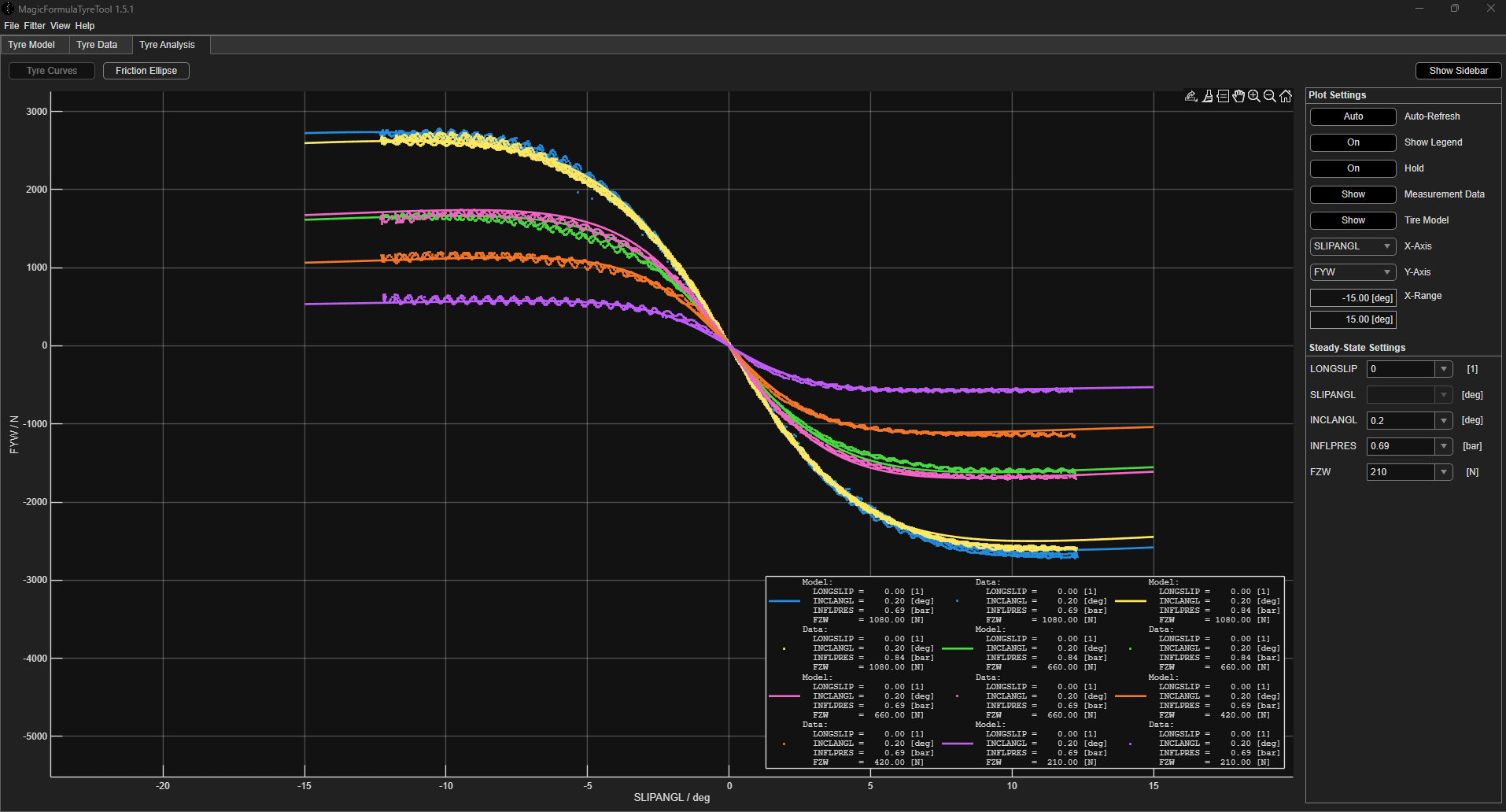
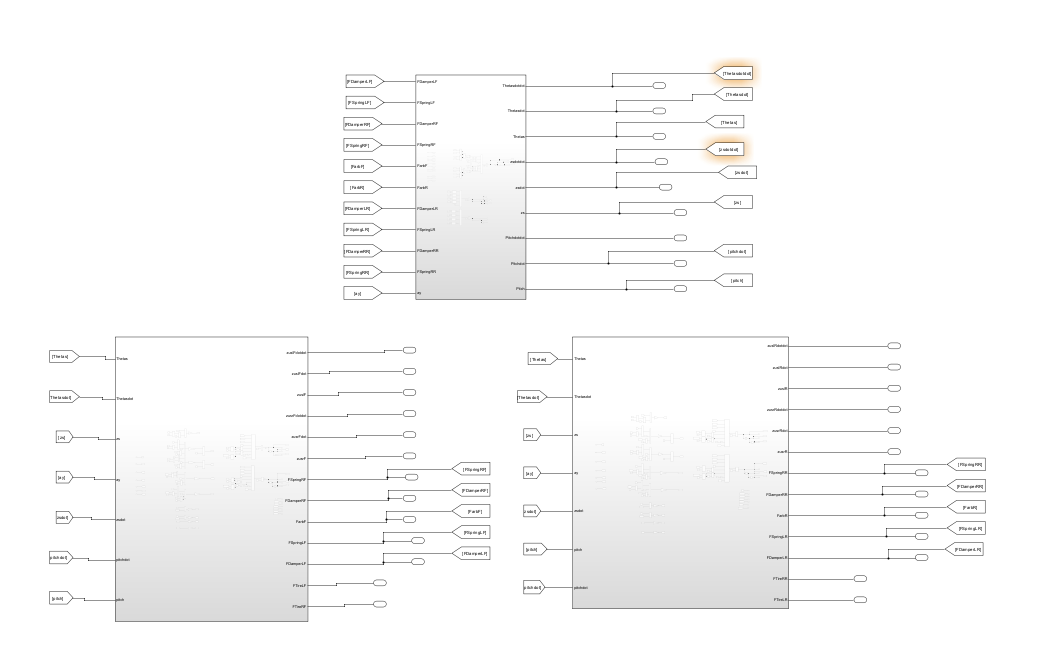
Lateral load transfer calculatorMass, CG height, track, roll stiffness and the roll centre heights go in. Out comes the transfer split by mechanism, the roll gradient, the front-to-rear distribution and an inside-wheel lift check, with a moment balance at the bottom to catch the small-angle assumption drifting.9 DOF corner balance modelThe same question with the suspension solved as it moves: heave, roll and pitch of the sprung mass and each unsprung corner, so a change in roll centre height is read at every tyre's own normal load instead of at one operating point.What the roll centre buysThe transfer split into elastic, geometric and unsprung, as a share of each axle. The geometric part is the one the roll centre height sets, and it costs nothing in spring rate: that is the whole reason for choosing the heights deliberately rather than taking what the linkage gives.Front suspension in Adams CarBoth corners and the steering rack, built to the hardpoints the calculations assumed.Rear cornersThe linkage the rear roll centre height is measured off as the suspension moves.Full vehicleThe assembly the two roll centre answers were checked against.
Four of the runs the setup decisions came out of. The rest of the library, every model and every plot, is on its own page.
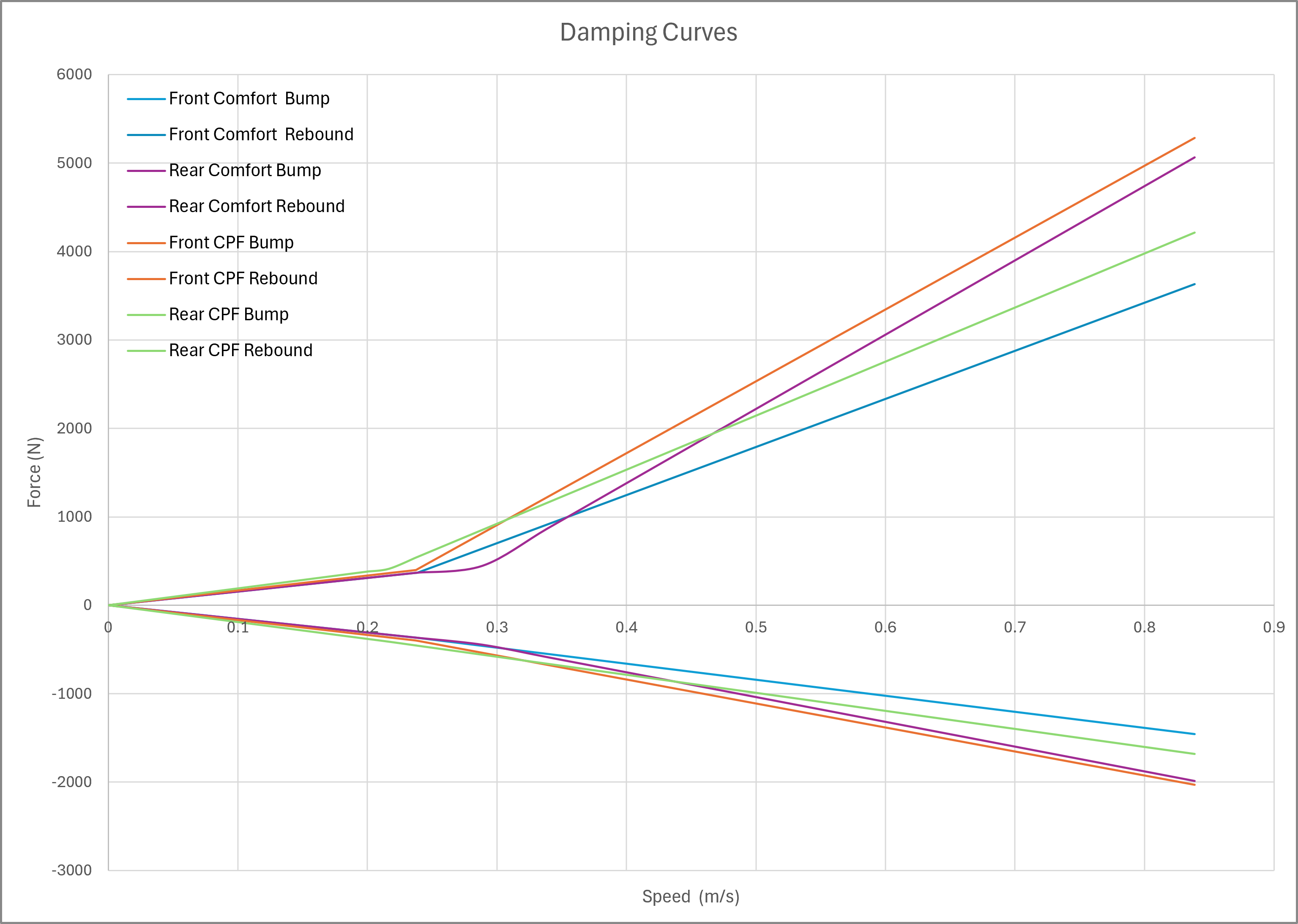
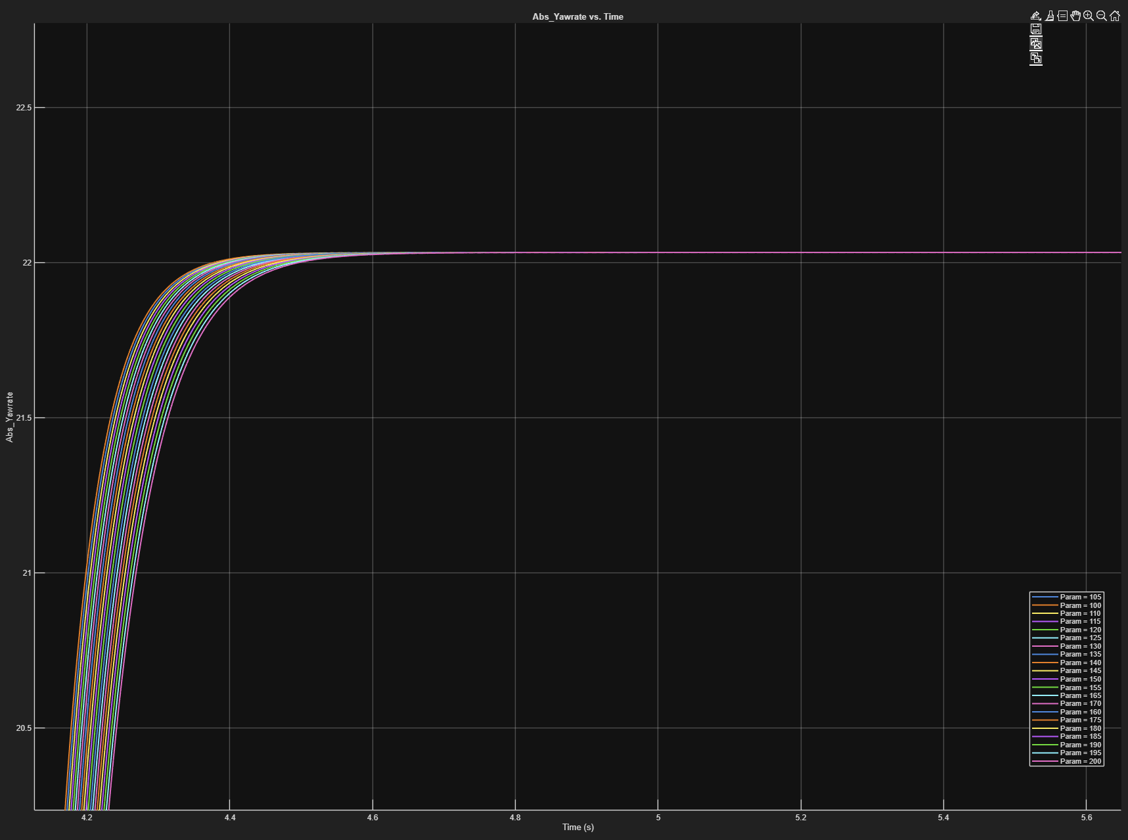
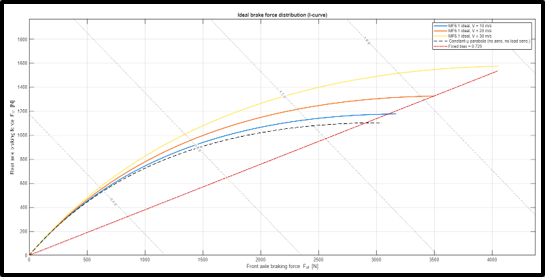
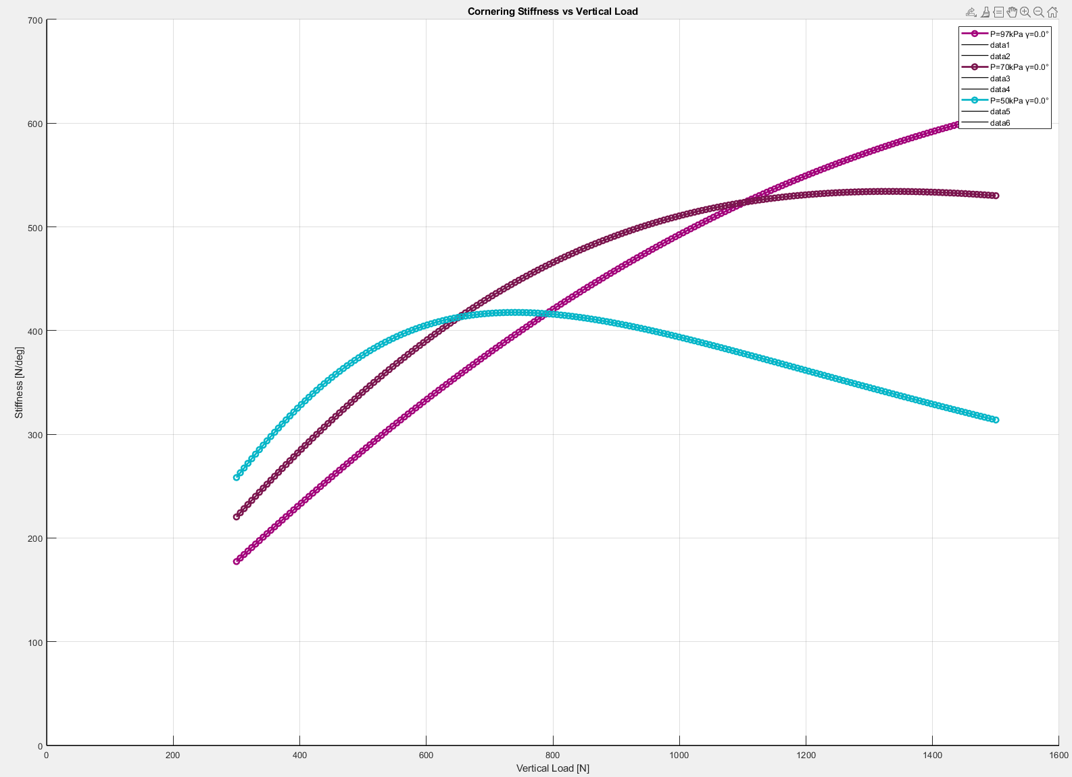
Lateral load transfer, by mechanismThe front puts 26.4 per cent of its transfer through geometry against the rear’s 4.8. That is a balance adjustment which costs nothing in spring rate.Damping sweep: ride against controlRMS body acceleration bottoms out near 1550 Ns/m. Past that, more damping costs comfort and buys nothing back.Tyre fit against measured dataMagic Formula 6.1 over the test data at four vertical loads. This is the TIR file every other model calls.Brake bias against the I-curveThe fixed 0.725 bias line laid over the ideal distribution at three speeds, which is where the lock-up order is decided.